


ENVIRONMENTAL BONDS AND ACCOUNTABILITY: SAMPSON CAY CASE EXPOSES A REGULATORY GAP
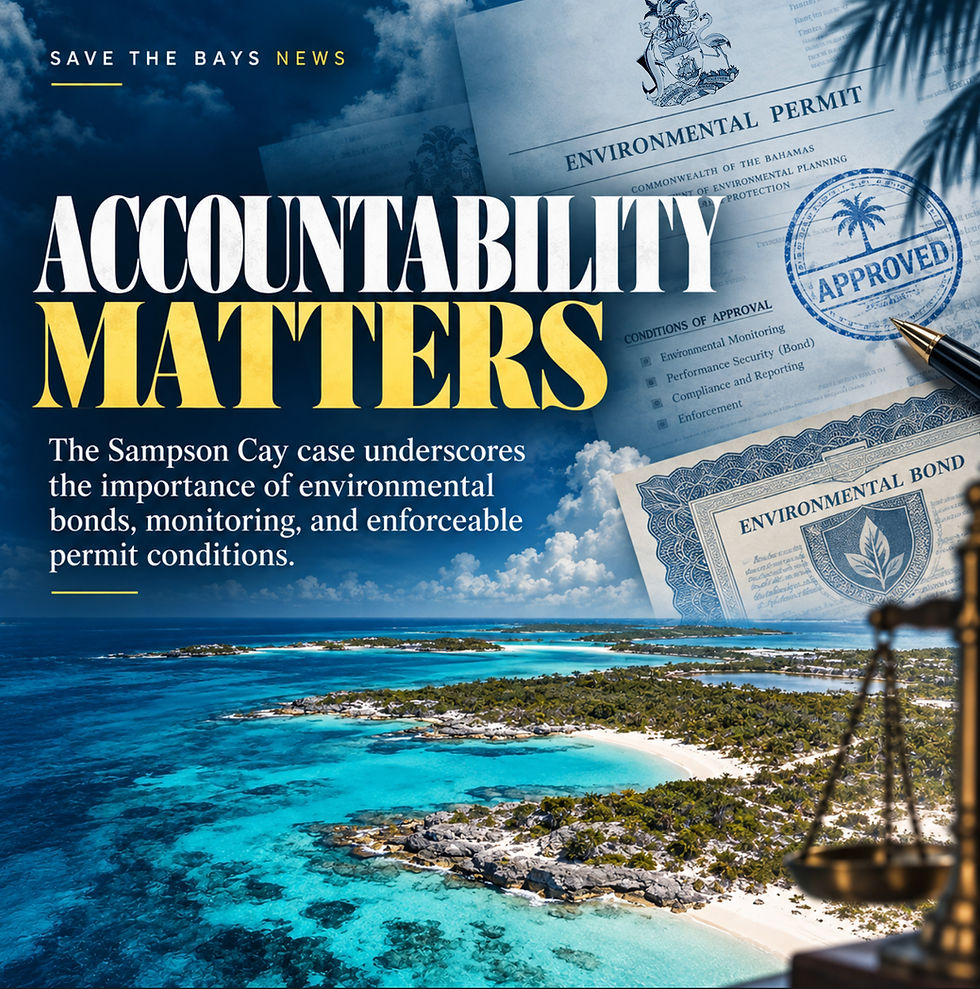
Environmental conditions mean little unless the systems needed to enforce them are actually functioning.
Another development in the Rosewood Exuma proceedings has highlighted a less visible—but extremely important—part of environmental regulation in The Bahamas: environmental performance bonds.
According to reporting on a September Supreme Court ruling, Yntegra said it had been unable to lodge environmental bonds required under its permits because the Department of Environmental Planning and Protection had not yet established the necessary payment infrastructure.
Environmental bonds can provide an important layer of protection by helping ensure funds are available when developers are required to satisfy environmental obligations, remediation requirements or other permit conditions.
The Sampson Cay situation therefore raises an institutional question extending far beyond this individual project.
The Bahamas has strengthened its environmental laws considerably, including through the Environmental Planning and Protection Act. But strong laws must also be supported by functioning administrative systems, monitoring, enforcement capacity and transparent records.
If environmental approvals require bonds, monitoring reports, mitigation measures or other safeguards, regulators must have the practical systems necessary to receive, verify and enforce them.
Developers also need clear procedures so that they know exactly how and when regulatory requirements must be satisfied.
Environmental protection is not achieved simply by issuing a Certificate of Environmental Clearance.
The real test comes afterward: monitoring the conditions, enforcing the conditions and ensuring that every safeguard required on paper actually exists in practice.
SOURCE: The Tribune, September 11, 2026.


Comments